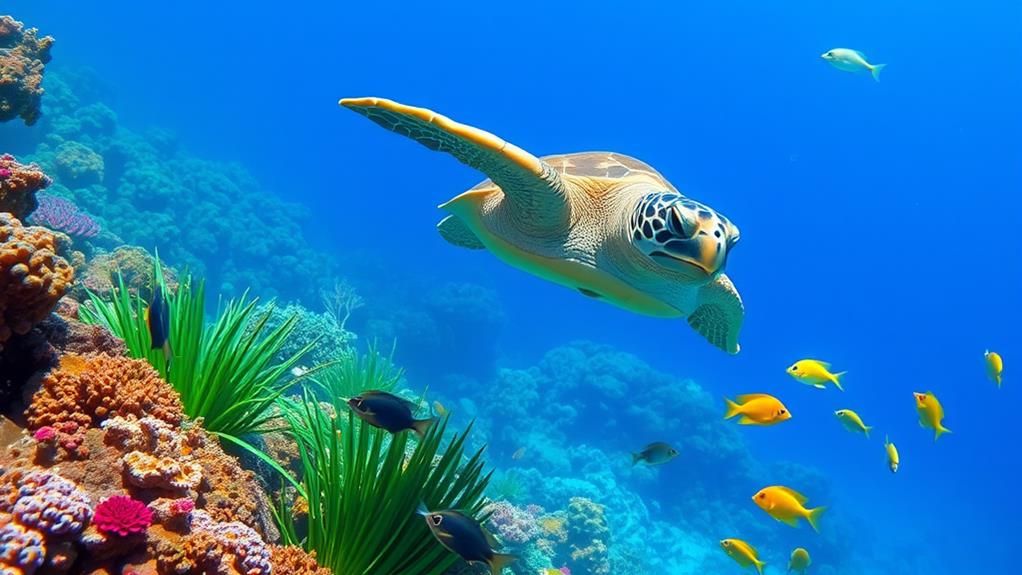
What do Sea Turtles eat? It depends, they have varied diets that depend on their species. Herbivorous turtles, like green turtles, focus on seagrasses and algae, crucial for ecosystem health. In contrast, carnivorous species, such as loggerheads, primarily consume hard-shelled prey like crabs and mollusks. Omnivorous turtles exhibit dietary flexibility, enjoying both plant and animal matter, including jellyfish and crustaceans. Their unique feeding habits play essential roles in maintaining marine ecosystem balance. Understanding these dietary preferences offers insights into their ecological impact and conservation needs. There’s much more to explore about how each turtle species thrives in their environment.
Table of Contents
Overview of Sea Turtle Diets
While you might think all sea turtles have a similar diet, their eating habits vary significantly based on species and habitat. Habitat influences what’s available to these creatures, as different environments provide distinct food sources.
For example, turtles in coral reef ecosystems often feed on sponges and jellyfish, while those in coastal waters might consume crustaceans and sea grasses.
Each species has unique nutritional needs that inform their feeding preferences. Loggerhead turtles, for instance, require a diet rich in hard-shelled organisms, adapting their powerful jaws to crack open prey like conchs and sea urchins.
Green turtles, on the other hand, have a diet primarily consisting of seagrasses, which fulfills their herbivorous requirements.
Understanding these dietary variations is crucial for conservation efforts and habitat management. By recognizing how habitat influences the nutritional needs of different sea turtle species, you can advocate for the protection of their environments.
Ensuring the availability of diverse food sources is vital for maintaining their health and supporting reproductive success.
Herbivorous Sea Turtles
Herbivorous sea turtles, such as the green turtle, are prime examples of how specific dietary preferences align with their ecological roles. By primarily consuming plant matter, they help maintain the health of marine ecosystems. Their diet significantly influences the abundance and diversity of seagrass beds and algae populations.
You may find that these turtles primarily consume:
- Seagrass: Essential for marine habitats, it provides food and shelter for various marine species.
- Algae: Their algae consumption helps control growth on coral reefs, promoting a balanced ecosystem.
- Marine plants: Other aquatic plants also contribute to their diet, enhancing the biodiversity of their feeding grounds.
Understanding the dietary habits of herbivorous sea turtles is crucial. Their grazing activities not only support their survival but also foster the regeneration of seagrass beds, which in turn benefits other marine life.
Carnivorous Sea Turtles
Carnivorous sea turtles play a crucial role in marine ecosystems, primarily by influencing prey populations.
You’ll find that their feeding habits vary significantly among species, reflecting their unique preferences and dietary needs.
Understanding what these turtles eat reveals important insights into their behavior and ecological impact.
Feeding Habits Overview
Although many people associate sea turtles with a plant-based diet, some species are primarily carnivorous, showcasing a fascinating range of feeding habits.
These carnivorous sea turtles have developed specific feeding strategies that reflect their dietary needs and ecological roles. Their digestive adaptations enable them to efficiently process a diet rich in animal matter.
Key feeding strategies include:
- Ambush Predation: Some turtles use stealth to surprise their prey, capitalizing on their speed and agility.
- Benthic Foraging: Others forage along the ocean floor, using their powerful jaws to break open shells and access soft tissues inside.
- Scavenging: Certain species also scavenge for carrion, capitalizing on available resources without expending significant energy.
These adaptations and strategies not only highlight the versatility of carnivorous sea turtles but also their importance in maintaining marine ecosystems.
Prey Preferences and Diet
Many species of sea turtles exhibit distinct prey preferences that reflect their unique ecological niches and hunting techniques. For instance, the carnivorous loggerhead turtle primarily feeds on hard-shelled prey, such as crabs and mollusks, leveraging its powerful jaws to crack open shells.
Similarly, green turtles, although primarily herbivorous, may consume jellyfish in specific habitats, particularly when their nutritional needs require added protein.
In terms of habitat preferences, carnivorous sea turtles thrive in diverse environments, including coastal areas and deeper waters, where their prey is abundant. Your understanding of these preferences can help in conservation efforts, ensuring that habitats are protected to support the dietary needs of these turtles.
It’s essential to recognize that the diet of carnivorous sea turtles isn’t just about survival; it also plays a crucial role in maintaining the balance of marine ecosystems. By controlling prey populations, they contribute to the health of their habitats.
Omnivorous Sea Turtles
While some sea turtles are strict herbivores or carnivores, omnivorous sea turtles display a versatile diet that includes both plant and animal matter.
This dietary diversity is a key aspect of their survival, as it allows them to adapt to varying environmental conditions and food availability.
Omnivorous adaptations enable these turtles to thrive in different habitats, consuming organisms that are abundant in their surroundings.
You might find these omnivorous sea turtles feasting on:
- Sea grasses and algae, which provide essential nutrients.
- Crustaceans and mollusks, offering protein and energy.
- Jellyfish and small fish, which add variety to their diet.
Impact of Diet on Ecosystems
Omnivorous sea turtles play a significant role in their ecosystems, influencing both marine vegetation and animal populations. Their varied diet contributes to the dietary significance of these creatures, as they consume a range of foods, from seagrasses to jellyfish.
By grazing on seagrass beds, they help maintain the health of these critical habitats, promoting growth and preventing overgrowth that could suffocate marine life. Additionally, sea turtles act as a natural predator of jellyfish, which helps regulate their populations. This balance is essential, as unchecked jellyfish growth can lead to detrimental effects on fish populations and the overall health of marine ecosystems.
When you consider the interconnectedness of species, it becomes clear that the diet of sea turtles directly impacts ecosystem balance.
Moreover, the waste produced by sea turtles enriches the ocean floor, fostering nutrient cycling and supporting various marine life forms. Thus, the dietary habits of sea turtles aren’t just about their survival; they also play a vital role in sustaining the delicate balance of marine ecosystems.
Feeding Habits by Species
When examining the feeding habits of sea turtles, it’s essential to recognize the significant differences between herbivorous and carnivorous species.
Herbivorous turtles primarily consume seagrasses and algae, while carnivorous species favor jellyfish and crustaceans.
Understanding these dietary preferences sheds light on their ecological roles and adaptations.
Herbivorous Species Diet
Herbivorous sea turtles, such as the green sea turtle, primarily thrive on a diet rich in marine vegetation, showcasing a remarkable adaptability to their habitats.
These turtles exhibit several herbivore adaptations that allow them to efficiently consume and digest their plant-based diet. Their strong jaws and specialized teeth are perfect for grazing on seagrass and algae, which are vital components of their nutritional intake.
Understanding the importance of seagrass in their diet is crucial, as it provides essential nutrients and serves as a habitat for various marine organisms.
By feeding on seagrass, these turtles help maintain the health of their ecosystems, promoting biodiversity and nutrient cycling.
Key aspects of herbivorous sea turtle diets include:
- Seagrass: A primary food source that offers vital nutrients and supports ecosystem health.
- Algae: Another essential component, providing additional energy and nourishment.
- Marine Plants: Various other aquatic plants contribute to their diverse diet.
Carnivorous Species Preferences
Carnivorous sea turtles, like the loggerhead and hawksbill, have distinct feeding habits that reflect their dietary needs and preferences. Loggerheads primarily use their strong jaws to crush hard-shelled prey, such as crabs and mollusks. Their hunting techniques involve ambushing or slowly stalking their prey, allowing them to conserve energy while maximizing their catch rate.
Hawksbills, on the other hand, prefer sponges and other soft-bodied organisms, showcasing a different prey selection that caters to their unique beak shape, which is designed for reaching into crevices.
Both species exhibit a remarkable adaptability in their feeding strategies, often choosing prey based on availability and environmental conditions. Loggerheads may shift their focus to jellyfish during certain seasons when their preferred prey is scarce, highlighting their opportunistic nature.
In contrast, hawksbills tend to specialize in a narrower range of prey, which can lead to competition with other species.
Understanding the feeding habits and preferences of these carnivorous turtles allows you to appreciate the delicate balance within marine ecosystems. By recognizing their roles as predators, you can advocate for conservation efforts that support their habitats and food sources, ultimately benefiting the wider oceanic environment.
Seasonal Dietary Changes
Sea turtles exhibit fascinating seasonal dietary changes influenced by environmental factors and food availability. As temperatures fluctuate throughout the year, these changes can significantly impact the types of food turtles consume. Warmer water temperatures often lead to an increase in algal blooms and the availability of specific prey, while cooler temperatures might limit these resources.
During different seasons, you might notice sea turtles adapting their diets to maximize nutrition and energy. Key factors include:
- Temperature influences: Warmer waters can lead to a greater abundance of soft-bodied prey, like jellyfish.
- Food availability: Seasonal migrations of prey species can lead to varying dietary patterns, requiring turtles to travel further for sustenance.
- Reproductive cycles: Female turtles may shift their diets to support the energy demands of nesting and egg production.
Threats to Sea Turtle Food Sources
Numerous threats jeopardize the food sources that sea turtles rely on for survival. One major concern is overfishing effects, which deplete the populations of seagrasses and jellyfish—two vital components of their diet. When fish populations are overharvested, the balance of marine ecosystems shifts, leading to fewer available food sources for turtles.
Habitat destruction also poses a significant threat. Coastal developments, pollution, and climate change disrupt the delicate environments where sea turtles forage. For instance, the degradation of seagrass beds not only reduces food availability but also impacts nesting sites.
As these habitats diminish, turtles struggle to find adequate nutrition, ultimately affecting their growth and reproduction.
Moreover, the introduction of invasive species can further complicate the situation. These species often outcompete native marine life, diminishing the food resources sea turtles depend on.
It’s crucial that we understand these threats and advocate for sustainable practices. By supporting marine conservation efforts and responsible fishing regulations, you can help ensure that sea turtles have access to the food sources they need to thrive.
Together, we can work towards preserving their delicate ecosystems for future generations.
Frequently Asked Questions
How Do Sea Turtles Find Their Food?
You observe sea turtles using foraging behavior and sensory adaptations to locate food. Their keen sense of smell and vision help them navigate underwater environments, allowing them to efficiently find and consume their preferred meals.
Are There Specific Feeding Times for Sea Turtles?
You’ll find that sea turtles exhibit distinct feeding behaviors, often aligning with specific times. Their dietary preferences emerge during dawn and dusk, symbolizing nature’s rhythm, ensuring they thrive while nourishing the ocean’s delicate balance.
Can Sea Turtles Eat Human Food Leftovers?
You shouldn’t feed sea turtles human food leftovers. Their diet preferences lean towards natural sources, and human food safety can pose health risks. It’s crucial to prioritize their well-being by sticking to appropriate, species-specific diets.
What Role Do Sea Turtles Play in Their Food Web?
You’ll find sea turtles crucial to maintaining ecosystem balance. They occupy various trophic levels, regulating populations of seagrass and jellyfish, thus promoting biodiversity and healthy habitats, which ultimately supports other marine life in their environment.
Do Sea Turtles Have Any Natural Predators While Feeding?
While feeding, sea turtles face natural threats like sharks and larger fish. Their feeding behavior often leads them into vulnerable situations, highlighting the delicate balance of marine ecosystems and the importance of protecting these magnificent creatures.
Conclusion
In the grand tapestry of marine ecosystems, sea turtles play a vital role, weaving their dietary preferences into the fabric of ocean life. Whether munching on seagrass, snacking on jellyfish, or sampling a mix of both, these creatures influence their surroundings in profound ways. However, as threats to their food sources loom, we must act to safeguard their diets. Preserving their habitats ensures that the delicate balance of marine life remains intact, allowing future generations to marvel at these magnificent beings.