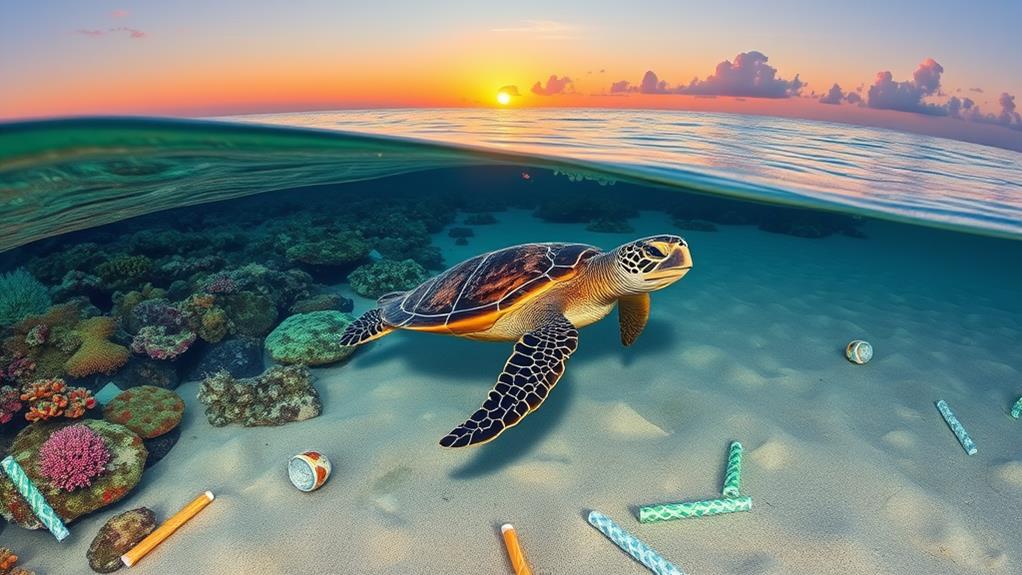
You can protect sea turtles and help our oceans by ditching plastic straws for eco-friendly alternatives. Sea turtles and straws don’t mix but they often mistake plastic straws for food, leading to choking and serious injuries. Each day, millions of straws end up in our oceans, disrupting delicate marine ecosystems. By choosing reusable or biodegradable straws, you reduce plastic waste and support ocean health. Every small action counts and inspires others to make sustainable choices too. Join the fight against plastic pollution and discover how your efforts can make a significant impact on sea turtle conservation and marine life.
Table of Contents
Importance of Sea Turtles
Sea turtles play a crucial role in maintaining the health of our oceans, and it’s vital we recognize their importance. These remarkable creatures contribute significantly to marine ecosystem health by helping to balance seagrass beds and coral reefs. As they graze on seagrasses, they promote growth and enhance habitats for countless marine species. Without them, these ecosystems would suffer, leading to a decline in biodiversity.
By supporting sea turtle conservation efforts, you’re directly aiding in the preservation of these vital ecosystems. When you advocate for the protection of sea turtles, you’re not just saving a species; you’re also ensuring the survival of various marine life that depends on healthy habitats. This interconnectedness highlights the importance of your actions—whether it’s participating in local conservation initiatives or spreading awareness about their plight.
Every small effort counts! By making informed choices, you can help protect sea turtles and, in turn, the oceans we cherish. Embrace the responsibility of serving not just sea turtles, but the entire marine ecosystem.
Together, we can foster a healthier ocean, where every creature thrives, and future generations can enjoy the beauty of our seas.
The Plastic Pollution Crisis
Plastic pollution is suffocating our oceans and threatening the very existence of sea turtles. Every year, millions of tons of plastic waste enter our seas, carried by ocean currents to the farthest reaches of marine ecosystems. This pollution disrupts delicate habitats, endangering not just turtles, but countless marine species that rely on healthy oceans.
When you think about the impact of plastic, consider how it entangles, chokes, and poisons marine life. Sea turtles, for instance, often mistake plastic bags for jellyfish, their primary food source. This not only jeopardizes their health but also disrupts the entire food web within these ecosystems.
The ripple effects are profound, affecting fish populations and, ultimately, human communities that depend on these resources.
You have the power to change this narrative. By reducing your plastic usage, especially single-use items like straws, you contribute to a cleaner ocean. Every small action counts in the battle against plastic pollution.
Let’s come together to protect sea turtles and preserve the beauty of our marine ecosystems for generations to come.
How Straws Harm Sea Life
Every time you sip from a plastic straw, you may unknowingly contribute to the growing menace faced by marine life. Straws are lightweight and easily swept into oceans, where they become a hazard for countless creatures, especially sea turtles.
When these turtles mistake plastic straws for food, they suffer from straw ingestion, which can lead to severe digestive blockages or even death.
But it’s not just turtles at risk; marine animals like fish, seabirds, and seals can also become entangled in plastic debris, leading to injury or drowning.
The simple act of using a straw can disrupt entire habitats, as plastic pollution accumulates and damages ecosystems. Coral reefs, vital for marine biodiversity, suffer from habitat disruption due to the presence of plastics, hindering their growth and survival.
Facts About Sea Turtle Species
Did you know that all sea turtle species are considered endangered, facing threats from habitat loss and climate change?
Understanding their unique migration patterns is crucial for their survival, as these journeys are vital for their breeding and feeding.
Let’s explore the fascinating facts about these remarkable creatures and why protecting them is essential for our oceans.
Endangered Species Overview
Facing numerous threats, sea turtles are among the most vulnerable species on our planet. With their populations dwindling, it’s crucial to understand the challenges they face. One of the biggest threats comes from habitat destruction, whether through coastal development or pollution.
These majestic creatures rely on healthy beaches for nesting and clean oceans for feeding. Unfortunately, human activities have severely compromised these essential habitats.
You can make a difference by supporting conservation strategies that protect sea turtles. Organizations around the world are working tirelessly to create safe nesting sites, reduce plastic pollution, and promote sustainable fishing practices.
By advocating for these initiatives, you’re not just raising awareness; you’re actively contributing to the survival of these incredible animals.
Moreover, every small action counts. By ditching plastic straws and reducing your plastic use, you help lessen the threat of ocean pollution that endangers sea turtles.
Remember, when you choose to protect their habitats, you’re preserving a vital part of our marine ecosystem. Together, we can ensure future generations get to experience the beauty of sea turtles in their natural environment.
Let’s unite for their survival!
Habitat and Migration Patterns
Understanding the habitat and migration patterns of sea turtles is vital for their conservation. These magnificent creatures rely on specific nesting sites, often returning to the same beaches where they were born.
By protecting these areas from pollution and development, you can help ensure future generations of sea turtles thrive.
Sea turtles embark on extensive migratory routes that can span thousands of miles. They travel between feeding grounds and nesting sites, navigating through ocean currents and using the Earth’s magnetic fields.
Your awareness and action can make a difference in preserving these critical pathways.
Every time you choose to reduce plastic use, you’re contributing to cleaner oceans and safer migratory routes for sea turtles.
It’s essential to support efforts that protect their habitats from destructive practices and pollutants.
The Lifecycle of a Plastic Straw
When you use a plastic straw, you mightn’t think about its journey from production to disposal.
These straws are made from petroleum-based materials, which contribute significantly to environmental pollution.
Understanding this lifecycle can help you see why reducing plastic use is crucial for protecting sea turtles and our oceans.
Production and Materials Used
Often overlooked, the lifecycle of a plastic straw begins with the extraction of fossil fuels, primarily petroleum or natural gas.
These raw materials undergo complex production processes that transform them into the plastic we know. Factories convert crude oil into polyethylene, a lightweight plastic that’s ideal for straws.
As you consider your daily choices, think about the resources and energy consumed in this process. Each straw you see represents not just a single-use item, but also a significant environmental cost that often goes unnoticed.
The production of plastic straws contributes to greenhouse gas emissions and requires precious water resources.
By understanding the journey of plastic straws from raw materials to production, you can appreciate the impact of your choices. Imagine the positive change that could occur if you opted for reusable alternatives instead.
Every small action counts, and together, we can reduce the demand for plastic straws.
Join the movement to protect sea turtles and other marine life by choosing sustainable options. Your commitment can help shift the tide away from plastic and toward a healthier planet.
Make a difference, one sip at a time.
Environmental Impact Overview
Every year, billions of plastic straws find their way into oceans, wreaking havoc on marine ecosystems. These straws don’t just disappear; they break down into smaller microplastics, posing a severe threat to marine biodiversity.
Sea turtles, for example, often mistake these colorful straws for jellyfish, leading to choking or internal injuries that can be fatal.
The lifecycle of a plastic straw is a testament to our throwaway culture. From production to disposal, straws contribute to pollution and habitat destruction.
When they enter our oceans, they disrupt the delicate balance of ocean ecosystems, affecting not just turtles but countless other marine species. Fish, birds, and even coral reefs suffer when plastics invade their habitats.
Alternatives to Plastic Straws
A staggering number of plastic straws—estimated at 500 million used daily in the U.S. alone—contribute significantly to ocean pollution, threatening the survival of sea turtles and other marine life.
Thankfully, there are eco-friendly options that can help you make a positive impact!
Here are three alternatives to plastic straws you should consider:
- Reusable Straws: Choose from durable materials like metal, silicone, or glass. They’re stylish and can be used time and time again, reducing waste.
- Bamboo Straws: These natural, biodegradable options aren’t just trendy; they also decompose safely in the environment.
- Paper Straws: A great single-use alternative, paper straws are compostable and come in various fun designs to brighten your drink.
Benefits of Biodegradable Straws
Embracing sustainability brings a sense of responsibility and hope for our planet’s future. By choosing biodegradable straws, you’re not just making a personal choice; you’re contributing to a global movement towards eco-friendly options that protect our environment and its inhabitants.
Biodegradable materials break down naturally over time, reducing the burden of waste that often harms wildlife, particularly vulnerable species like sea turtles.
When you opt for biodegradable straws, you’re supporting innovative solutions that lessen plastic pollution. These straws are made from renewable resources, which means they leave a smaller carbon footprint compared to traditional plastic.
Imagine enjoying your favorite beverage while knowing you’re making a positive impact on marine life!
Additionally, using biodegradable straws can inspire others around you to make similar choices. Your actions can spark conversations about sustainability, encouraging friends and family to consider eco-friendly options in their lives.
Every small change counts, and together, we can create a ripple effect that leads to a cleaner, healthier planet.
Impact of Straw Bans
Straw bans have gained momentum as communities recognize the need to combat plastic pollution and protect marine ecosystems, including the habitats of endangered sea turtles. By implementing these bans, you’re not just reducing plastic waste; you’re also fostering a culture of sustainability and awareness.
The impact of these bans can be profound:
- Increased Public Awareness: Every time a straw is offered or declined, it sparks conversations about plastic pollution and its effects on marine life, amplifying the message of conservation.
- Encouragement of Straw Alternatives: As businesses adapt, you’re likely to see more innovative, eco-friendly options like bamboo, metal, or paper straws, which can replace harmful plastic.
- Positive Ripple Effect: When communities unite for straw bans, it inspires other local initiatives, creating a movement that prioritizes the health of our oceans and wildlife.
Community Initiatives for Change
Community initiatives have the power to drive meaningful change, especially when it comes to protecting our precious sea turtles. By engaging in community cleanups, you not only help remove plastic waste from our beaches but also raise awareness about the dangers plastics pose to marine life.
Imagine the impact when neighbors come together, armed with bags and determination, to clean their local shorelines. Each piece of plastic removed is a step toward a healthier habitat for sea turtles.
Forming local partnerships can amplify these efforts. Collaborating with schools, businesses, and environmental organizations creates a stronger network dedicated to conservation.
You can host educational workshops, distribute reusable alternatives, and encourage local eateries to ditch plastic straws. By pooling resources and expertise, your community can foster a culture of sustainability that extends beyond cleanup days.
Every action counts, and your involvement can inspire others to join the cause. When you take part in these initiatives, you’re not just protecting sea turtles; you’re creating a legacy of environmental stewardship for future generations.
Let’s come together and make a lasting difference—our sea turtles are counting on us!
Educating Others on Plastic Issues
You can make a real difference by raising awareness about plastic pollution and its devastating impact on sea turtles.
By sharing information on sustainable alternatives, you help others see that choosing reusable products isn’t just a personal choice but a collective responsibility.
Let’s work together to inspire change and protect our oceans for future generations.
Plastic Pollution Awareness
Plastic pollution consistently poses one of the greatest threats to sea turtles and marine ecosystems.
As caring individuals, it’s crucial for you to raise awareness about this pressing issue. By informing others, you can spark change and inspire action.
Here are three impactful ways you can educate those around you:
- Share Facts: Teach others about the devastating effects of plastic straws and how they contribute to marine debris. Highlight that millions of sea turtles ingest plastic, mistaking it for food.
- Promote Alternatives: Discuss plastic straw alternatives, such as biodegradable or reusable straws. Encourage friends and family to make the switch and reduce their plastic footprint.
- Host Workshops: Organize marine debris education sessions in your community. Use these gatherings to engage participants in discussions about the importance of protecting marine life and the environment.
Sustainable Alternatives Promotion
Finding sustainable alternatives can significantly reduce our reliance on plastic and protect sea turtles from the dangers of pollution. By choosing reusable options, you’re not just making a personal choice; you’re joining a movement that prioritizes our planet’s health.
Imagine sipping your favorite beverage through a stainless steel or bamboo straw instead of a plastic one. It’s a small change, but it sends a powerful message about your commitment to the environment.
Educating others about eco-friendly materials plays a crucial role in shifting societal norms. When you share information about the harmful effects of plastic on marine life, you inspire your friends and family to rethink their habits.
Host workshops or discussions in your community to demonstrate how easy it’s to incorporate sustainable products into daily life.
Every effort counts, whether it’s opting for cloth bags, beeswax wraps, or biodegradable containers. By promoting these reusable options, you help create a culture that values sustainability over convenience.
Together, we can encourage more people to make conscious choices and ultimately protect sea turtles and their habitats. Let’s lead by example, showing that when we choose eco-friendly materials, we’re safeguarding the future for generations to come.
Personal Action Steps
Taking action to protect sea turtles can seem daunting, but every small step counts. Embracing personal responsibility means making lifestyle changes that can significantly impact these magnificent creatures.
You have the power to contribute to their survival, and it starts with simple choices. Here are three impactful actions you can take:
- Ditch the Straw: Say no to plastic straws. Opt for reusable or biodegradable alternatives. This simple change can prevent countless straws from entering our oceans and harming sea turtles.
- Educate Others: Share your knowledge about the dangers of plastic pollution. Encourage friends and family to join you in making eco-friendly choices. Your voice can inspire collective action!
- Support Clean-Up Initiatives: Participate in local beach clean-ups or organize your own. Every piece of trash you remove is one less hazard for sea turtles and their habitats.
The Role of Restaurants
In the bustling atmosphere of a restaurant, choices abound—not just on the menu, but also in the materials and practices that can impact the environment. As a restaurant owner or manager, you have the power to implement restaurant policies that favor eco-friendly initiatives.
Consider making menu changes to eliminate plastic straws, opting for biodegradable or reusable alternatives instead. This simple shift can significantly reduce waste and protect sea turtles.
Engaging customers through promotional campaigns can heighten awareness about sustainability. Encourage customer feedback on your eco-friendly efforts, fostering a sense of community and shared responsibility.
Staff training is also crucial; equip your team with knowledge about sustainable sourcing and waste reduction practices, so they can confidently communicate the restaurant’s commitment to the environment.
Forming community partnerships with local organizations can enhance your impact, allowing you to collaborate on initiatives that promote ocean conservation.
Government Policies on Plastic
Implementing effective government policies on plastic is crucial in the fight against environmental degradation and the protection of vulnerable species like sea turtles.
Without strong regulations, our oceans continue to suffer, and these magnificent creatures face dire threats. You can advocate for change by supporting initiatives that prioritize sustainability and conservation.
Here are three impactful actions you can encourage your local government to take:
- Plastic Bans: Push for legislation that restricts single-use plastics, helping to reduce waste that harms marine life.
- Recycling Programs: Advocate for better waste management strategies and accessible recycling initiatives to ensure that plastic waste is properly handled and repurposed.
- Legislative Advocacy: Get involved in campaigns that promote marine policies and conservation laws aimed at protecting sea turtles and their habitats.
Success Stories in Conservation
You’ll be inspired by the incredible success stories in sea turtle conservation that showcase the power of community action and innovative solutions.
From groundbreaking recycling initiatives that reduce ocean pollution to legislative changes that protect these magnificent creatures, every effort counts.
Together, we can celebrate these victories and learn how to keep the momentum going for future generations.
Innovative Recycling Initiatives
Across the globe, innovative recycling initiatives are making waves in the fight to protect sea turtles and their habitats.
These efforts not only reduce plastic waste but also inspire communities to come together and take action. You can be part of this positive change by supporting and participating in these initiatives.
Here are just a few success stories:
- Recycling Technology: New technologies are turning plastic waste into useful products, like turtle-safe beach gear, reducing the risk of entanglement for these majestic creatures.
- Community Workshops: Local organizations are hosting workshops that teach individuals how to recycle effectively and create eco-friendly products, fostering a deeper connection to the ocean and its inhabitants.
- Beach Clean-Up Events: Groups are organizing clean-ups that remove harmful debris from shorelines, directly benefiting sea turtles and their nesting sites.
Community Engagement Efforts
Engaging communities in conservation efforts has proven to be a powerful way to protect sea turtles and their ecosystems. When you participate in community cleanups, you not only help remove harmful plastics from beaches but also raise awareness about the impact of pollution on marine life.
Imagine the difference you can make by joining forces with local partnerships that share your commitment to preserving these majestic creatures.
Success stories abound when communities unite for a common cause. For instance, in many coastal towns, volunteers have come together to organize monthly cleanups, transforming littered beaches into safe habitats for nesting sea turtles.
These events foster a sense of community pride and empower individuals to take action in protecting their environment.
Legislative Changes Impacting Conservation
Legislative changes often play a crucial role in the conservation of sea turtles and their habitats. By engaging in legislative advocacy, you can help shape policies that protect these majestic creatures.
Recent success stories illustrate how collective efforts have led to impactful changes, ensuring a brighter future for sea turtles.
Consider these three examples of effective legislation:
- Ban on Single-Use Plastics: Many states have implemented bans on plastic straws and bags, reducing ocean pollution that harms sea turtles.
- Increased Conservation Funding: Legislative measures have led to more funding for research and protection programs, enabling organizations to monitor turtle populations and restore habitats.
- Stricter Fishing Regulations: New laws impose limits on bycatch, protecting sea turtles from accidental capture in fishing gear.
These initiatives show that when you advocate for change, you can make a real difference.
Supporting Marine Conservation Efforts
How can you make a real difference in the fight to protect sea turtles? Supporting marine conservation efforts is a powerful way to contribute. Start by educating yourself about the significance of marine ecosystems. Sea turtles play a vital role in maintaining the health of these environments, and their decline can lead to broader ecological imbalances.
You can actively participate in conservation strategies by volunteering with local organizations dedicated to protecting sea turtles and their habitats. These groups often conduct beach clean-ups, monitoring programs, or awareness campaigns that need your support. Every action counts, whether it’s helping to collect data on nesting sites or spreading the word about the dangers of plastic pollution.
Moreover, consider donating to or fundraising for marine conservation initiatives. Your financial support can help fund research, habitat restoration, and advocacy efforts that are crucial for the survival of these magnificent creatures.
Together, we can create a ripple effect of positive change. By committing to marine conservation, you not only protect sea turtles but also contribute to the overall health of our oceans, ensuring that future generations can experience these wonders too.
Join the movement—every effort matters!
Frequently Asked Questions
What Are the Main Threats to Sea Turtle Populations Today?
Sea turtle populations face significant threats today, including habitat destruction, climate change, fishing nets, pollution sources, and illegal trade. You can help raise awareness and support conservation efforts to protect these vulnerable creatures.
How Can Individuals Participate in Local Beach Clean-Ups?
Have you ever imagined how clean beaches could impact your community? By joining local beach clean-ups, you’ll enjoy environmental benefits, foster community engagement, and help create a healthier habitat for all marine life. Your efforts matter!
Are There Any Sea Turtle Rescue Organizations I Can Support?
You can support sea turtle rescue organizations like Sea Turtle Conservancy or Loggerhead Marinelife Center. Participate in their fundraising events, and help raise awareness for sea turtle conservation. Your involvement makes a real difference!
What Are Common Misconceptions About Plastic Straw Usage?
Many believe plastic straws are harmless, but their environmental impact is profound. You can choose straw alternatives like bamboo or metal. Educating others helps dispel these myths and fosters a planet-friendly mindset for future generations.
How Do Different Countries Regulate Plastic Straw Usage?
Different countries tackle plastic straw usage with various bans and regulations. You’ll find some enforcing strict plastic straw bans while others promote alternatives. Embracing global regulations can significantly reduce plastic waste and protect our environment.
Conclusion
By ditching disposable plastic straws, you can make a significant splash in saving our sea turtles. Every small step you take helps combat the plastic pollution crisis and protects precious marine life. Together, we can turn the tide, transforming habits into hope for a healthier ocean. Join the movement, support sustainable solutions, and let’s champion conservation. Your choices matter—let’s create a cleaner, greener world for future generations of sea turtles and all the creatures that call the ocean home!